Walnuts as a natural defence to lower cholesterol
Published on April 18, 2026
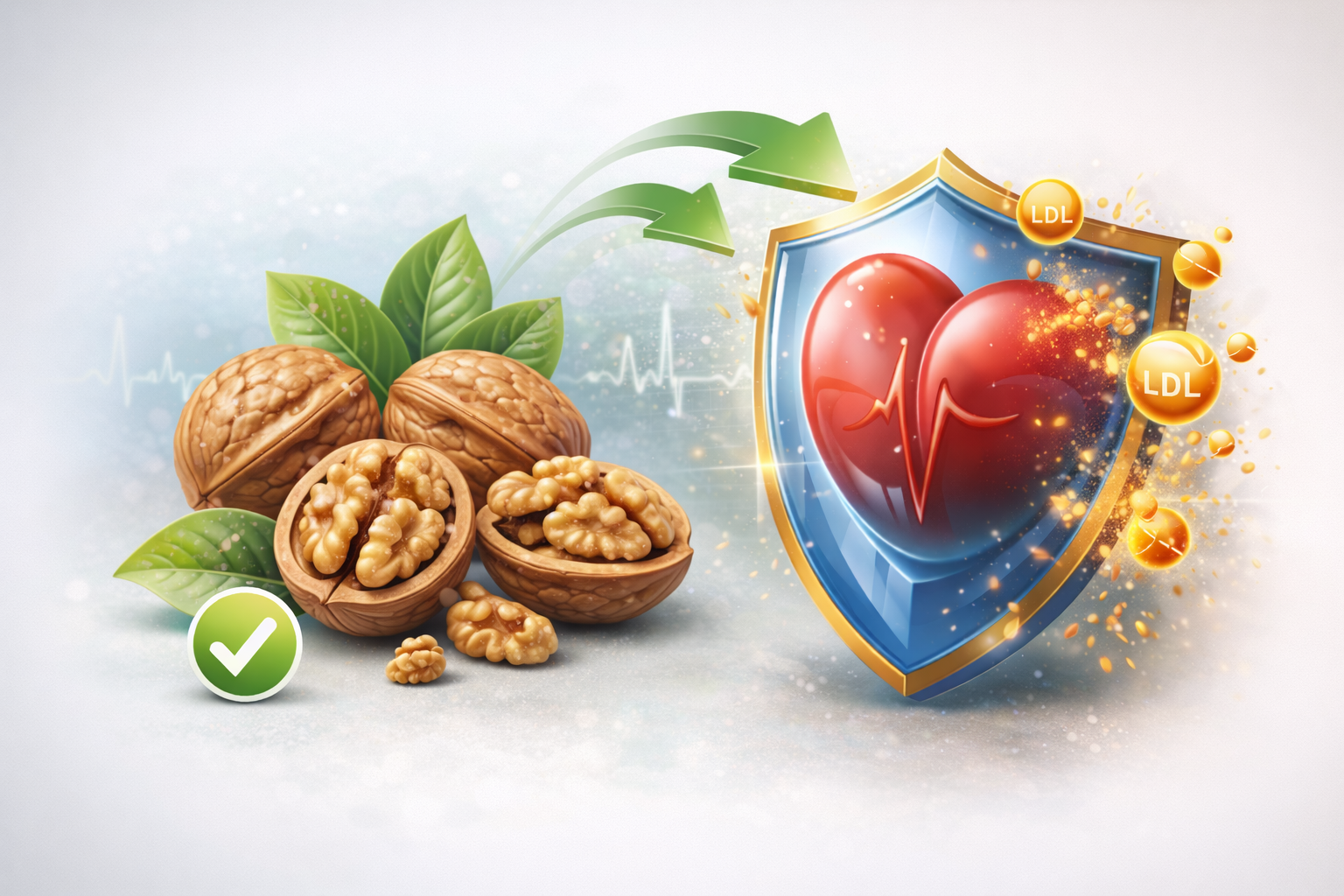
Walnuts have emerged as a powerful natural ally in the fight against high cholesterol, offering a delicious and evidence-based way to support heart health. Rich in healthy fats, fiber, and bioactive compounds, these nutrient-dense nuts can help lower "bad" LDL cholesterol levels while improving overall lipid profiles, without the need for drastic dietary overhauls or consuming statins at the stage of primordial or primary prevention.
Nutritional powerhouse
One ounce (about 14 halves or 28 grams) of walnuts delivers approximately 185 calories, with a unique composition that sets them apart from other nuts. They are packed with polyunsaturated fats, including a significant amount of alpha-linolenic acid (ALA), a plant-based omega-3 fatty acid (around 2.5 grams per ounce). This makes walnuts the only tree nut that provides an excellent source of ALA. They also contain monounsaturated fats, plant sterols (phytosterols), fiber (about 2 grams per ounce), vitamin E, folate, magnesium, and antioxidants like polyphenols.
Unlike many foods high in fat, walnuts do not promote weight gain when consumed in moderation as part of a balanced diet. Their combination of protein, fiber, and healthy fats promotes satiety, helping control appetite. The phytosterols in walnuts compete with cholesterol for absorption in the intestines, further aiding in cholesterol management.
The scientific evidence for cholesterol reduction
Numerous clinical trials and meta-analyses confirm walnuts' cholesterol-lowering effects. A landmark 1993 study published in the New England Journal of Medicine found that incorporating moderate amounts of walnuts (about 84 grams per 2,500 calories daily) into a cholesterol-lowering diet reduced total cholesterol by 12.4% and LDL cholesterol by 16.3% in healthy men, beyond the benefits of the base diet alone.
More recent research reinforces these findings. The Walnuts and Healthy Aging (WAHA) study, a two-year randomized controlled trial involving over 600 older adults (ages 63-79), showed that eating about half a cup (roughly 30-60 grams or 15% of daily energy) of walnuts daily lowered total cholesterol by 8.5 mg/dL (4.4%) and LDL cholesterol by 4.3 mg/dL (3.6%). It also reduced intermediate-density lipoprotein cholesterol by 16.8%, total LDL particles by 4.3%, and small LDL particles by 6.1%—changes linked to lower cardiovascular risk. Benefits were consistent across different diets and locations (Spain and the U.S.), with greater LDL reductions observed in men (7.9%). Body weight remained stable.
A 2018 meta-analysis of 26 trials with 1,059 participants found walnut-enriched diets reduced total cholesterol by an additional 6.99 mg/dL (3.25%), LDL cholesterol by 5.51 mg/dL (3.73%), and triglycerides by 4.69 mg/dL (5.52%) compared to control diets. Apolipoprotein B, a marker of atherogenic particles, also decreased. Effects were more pronounced when compared to Western or American diets.
Other studies report LDL reductions of 9-16% with walnut intakes of 42-85 grams daily, depending on baseline cholesterol levels and overall diet. Benefits appear dose-dependent and are often greater in individuals with higher starting LDL or those following less heart-healthy diets.
How this works on the human body
Walnuts combat cholesterol through multiple pathways. Their polyunsaturated fats, particularly ALA and linoleic acid, replace saturated fats in the diet, prompting the liver to remove more LDL from the blood. ALA may enhance LDL receptor activity, improving clearance. Polyunsaturated fats also enrich LDL particles, making them less prone to oxidation and easier for the body to handle.
Antioxidants and polyphenols reduce oxidative stress and inflammation, protecting blood vessels and improving endothelial function. Fiber binds bile acids in the gut, forcing the liver to use more cholesterol to produce new bile, thus lowering circulating levels. Plant sterols block dietary cholesterol absorption. Collectively, these actions improve not just quantity but quality of lipids, reducing small, dense LDL particles most associated with plaque buildup.
Walnuts may also modestly benefit blood pressure and vascular health, adding to their cardioprotective profile.Walnuts stand out as an accessible, natural ingredient for managing cholesterol. Backed by decades of research, regular consumption can meaningfully lower LDL cholesterol, improve lipoprotein quality, and support cardiovascular health without side effects or weight gain. As part of a balanced lifestyle—including exercise and limited processed foods—walnuts offer a simple, tasty step toward better heart health.
For consultations on health and well-being, you can write to : office@edmond.in